Showing posts with label Nutrition and Eating Well. Show all posts

2009/03/23

Smart Ways to Beat the Munchies


Janice Taylor’s new book, All Is Forgiven, Move On: Our Lady of Weight Loss’s 101 Fat-Burning Steps on Your Journey to Sveltesville ($20, Viking Studio), is chock-full of unusual stay-slim tricks. Try these three strategies to beat the “call of the Cheeto,” that late-afternoon siren song from the vending machine.

Grab your iPod
Music activates the same pleasure center of your brain that food does. Click on something with a catchy rhythm, and you’ll forget your hunger quick.

Get some rays
Twenty minutes of sunlight (wear sunscreen, of course) can kill a powerful food craving—and lift your mood. In contrast, staying cooped up all day in a windowless office may actually boost the urge to snack on high-sugar, high-refined-carb foods, according to University of Texas mood expert Michael Smolensky, PhD.

Breathe deeply
Stressed? That’s when you’re most likely to give in to a junk-food craving. Deep breathing can kill the urge to snack by calming you down.
(PHOTO: 123RF)

Last Updated: February 20, 2009
Filed Under: Nutrition and Eating Well

2009/03/21

FAQs: A Reality Check on Omega-3s


Q: How much of the good fats do I need each day?
A:
That’s open to debate, but the Institute of Medicine says 1.1 grams (1,100 milligrams) a day is enough for women. You may need a combination of foods and supplements to reach that level. Studies indicate more is probably better.

Q: Will supplements give me fishy breath or burps?
A:
A fishy odor or aftertaste is usually a sign of a poorly made product. Before buying, look for the words “molecularly distilled” on the label, a sign that any yucky stuff has been removed.

Q: Isn’t fish risky because of all the contaminants?
A:
Mercury and PCBs are cause for concern. But experts say seafood is safe for most of us as long as it’s limited to about two meals per week. For more info on safe fish here.

Last Updated: February 19, 2009
Filed Under: Nutrition and Eating Well

5 Reasons to Love (Good) Fat


If you skimp on healthy fats—omega-3s in fish, supplements, and some plant and dairy products—you’re missing out on a great way to help prevent a host of common problems. Here’s a quick look at how good these fats really are, and the best ways to work them into your life.

1. Fight those aches
How omega-3s help: Researchers at the University of Pittsburgh Medical Center found that nearly two-thirds of patients suffering from chronic neck and back pain stopped needing anti-inflammatory pain pills after taking fish-oil pills for 20 to 30 days. The key may be omega-3s’ ability to fight inflammation.

How to get them: You don’t necessarily have to take the pills, says Joseph C. Maroon, MD, a University of Pittsburgh neurosurgeon. Cold-water ocean fish (salmon, mackerel, herring) and lake trout are the best sources of anti-inflammatory omega-3s.

2. Stay slim
How omega-3s help: Mood swings can lead to bring-on-the-brownies moments that sabotage your efforts to lose weight. Omega-3s may help by stabilizing your moods, says Douglas Bibus, PhD, an omega-3 researcher and scientist at the University of Minnesota’s Academic Health Center.
How to get them: Bibus recommends taking a high-quality supplement for 30 days. If you don’t notice a difference, increase your dosage.

3. Have more “up” days
How omega-3s help: Another form of omega-3s known as DHA makes up 25 percent of your body’s brain fat and manages the production and flow of the feel-good chemical serotonin. People who battle depression seem to be DHA-deficient.

How to get them: Researchers believe a DHA supplement may be a gentler (and ultimately more effective) alternative to antidepressants, says David Perlmutter, MD, author of The Better Brain Book and an expert on the relationship between nutrition and neurological disorders. But don’t count on just any supplement available at a drugstore or on the Web. Here’s a list of omega-3 supplements judged in independent tests to be fresh and free of contaminants, and to have the amount of good fats listed on the label.

4. Breathe easier
How omega-3s help: Omega-3s may help reduce the inflammation associated with asthma. In a recent Indiana University study, patients taking fish-oil supplements were better at controlling exercise-triggered symptoms than people taking a placebo or just eating a normal diet were.
How to get them: A supplement is your best bet, Bibus says.

5. Keep your heart healthy
How omega-3s help: In addition to fighting inflammation, omega-3s may lower blood pressure and reduce clotting. And they may help fight diabetes, too. “Diabetes has a strong inflammatory component, which leads to a much greater risk of developing heart disease,” Bibus explains. Omega-3s help cells lower blood sugar, a key to avoiding diabetes, Perlmutter adds.
How to get them: Eat plant foods like flax, walnuts, spinach, arugula, avocados, and canola oil, and soy products like full-fat tofu and edamame. They have a form of omega-3s called ALA that may help prevent heart disease, according to Harvard Medical School scientists. Also eat coldwater fish twice a week. And if you like eggs, shop for brands like Eggland’s Best that contain high levels of omega-3s. Bon appétit.

by Julia Rosien

Last Updated: February 19, 2009
Filed Under: Nutrition and Eating Well

Fatty Foods That Fight Hunger


From Health magazine

Oleic acid, a compound in monounsaturated fat, may trigger your body to make a hormone called oleoylethanolamide that quiets hunger, according to University of California, Irvine, researchers. The foods listed below are rich in this good fat.
1. Avocados
2. Almonds
3. Green olives

Fat that satisfies: Monounsaturated fat in avocados is diet-friendly

Last Updated: February 13, 2009
Filed Under: Nutrition and Eating Well

2009/03/19

How to Age-Proof Your Diet


By Sarah Jio
From Health magazine

Remember when you swore that Lucky Charms could kill a hangover? Note to your older and wiser self: These days, your body needs more than a sugar rush to feel good.

The 30s

“Women in their 30s are trying to do it all,” says Keri Gans, RD, a spokeswoman for the American Dietetic Association. Your body needs plenty of energy to handle the load—and the right foods to counter the inevitable metabolism slowdown that happens as you get older. An active woman in her 30s of average height who weighs about 140 pounds should shoot for about 2,200 calories a day, Gans says.

MEAL PLAN

  1. Breakfast: Scrambled egg whites with spinach and tomatoes; whole-wheat toast. Egg whites provide lean protein to help control your weight. Tomatoes lend vitamin C to help with absorption. Spinach adds iron, a mineral you need to stay energized, Gans says. And whole-wheat toast provides fiber (so you don’t get the midmorning munchies).
  2. Lunch: Veggie pizza with half the cheese; mixed-greens salad. Hope Ricciotti, MD, associate professor of obstetrics and gynecology at Harvard Medical School, says pizza with less cheese is practically a “health food”—if it’s made with a whole-wheat-flour crust and eaten with a mixed-greens salad. Ask for half the cheese at your favorite pizza place, or just make it yourself.
  3. Dinner: Sirloin steak stir-fry or grilled salmon; steamed asparagus. Meat is iron-rich; choose lean and use it as a flavoring (like in a stir-fry). Don’t like steak? Salmon is packed with good-for-you omega-3 fats. And asparagus is a rich sources of folate, Dr. Ricciotti says.

Last Updated: February 26, 2009
Filed Under: Nutrition and Eating Well

The Best Cancer-Fighting Veggies


From Health magazine

Not all vegetables are created equal. Some are much better than others at lowering your risk of diseases associated with aging—like cancer—according to a new study in Food Chemistry.

Researchers say antioxidant compounds in dark-green vegetables like spinach and “fragrant” vegetables like onions and garlic inhibit the growth of tumor cells. 

 Eat More… : Eat Less…
 Brussels sprouts : Potatoes
 Kale : Carrots
 Cabbage : Tomatoes
 Garlic : Lettuce
 Spinach : Cucumbers

The bad news: These veggies make up only 1% of fruit-and-vegetable consumption in the United States, while those that have almost no cancer-preventive power (like potatoes) make up 60%. All veggies can help control your weight, but to get more of an anticancer punch, try these swaps:

Last Updated: February 23, 2009
Filed Under: Nutrition and Eating Well

Battle of the Bars: 2 New Snacks to Try


It’s 4 p.m., your stomach is grumbling, and you’re making a beeline for the vending machine. Stop; step away from the Hershey’s bar. There’s a better—and healthier—option.


Ideally, we’d all have the time and energy to make a fresh fruit salad for an afternoon pick-me-up. But for those of us with hectic schedules—and a rabid sweet tooth—we want instant gratification in the form of snacks. Here are two new bars that are a good alternative to sugar-laden candy bars.


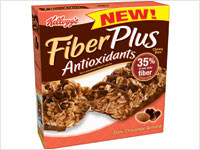
Kellogg’s FiberPlus Antioxidant Bars


Nutritional Breakdown:


Nine grams of fiber means your stomach won’t be rumbling anytime soon. Plus, this bar contains 20% of your daily recommended amount of zinc and vitamin E.
Taste: This bar comes in two flavors: Dark Chocolate Almond and Chocolate Chip. With a layer of chocolate on the top and bottom of the bar, your sweet tooth will sing “Alleluia.” The rolled oats are surprisingly hearty, with a hint of honey. If you like more pure-tasting snacks, this bar may be a little too saccharine-sweet for you. But, one staffer gave them the ultimate compliment: “There’s no way these can be healthy.” Fortunately, they are.


Suggested retail price: .09 for a box of five bars.


Kashi TLC Fruit & Grain Bars


Nutritional Breakdown:


With a solid four grams of fiber and protein, this bar will kick you into high gear. Just like all Kashi products, it is free of highly refined sweeteners and artificial ingredients.


Taste: The bar comes in three variations: Pumpkin Pie, Dark Chocolate Coconut, and Raspberry Chocolate. Of the three, the Health.com staff raved over the Dark Chocolate Coconut’s rich taste. One staffer commented that you can really taste the sweet coconut flavor beneath the dark chocolate.


Pumpkin Pie was another crowd-pleaser, as one staffer said, “Yum, Thanksgiving came early.” The pumpkin-flavored topping has a creamy texture, with a nice sprinkling of nutmeg and caramel.


The Raspberry Chocolate combination, however, didn’t win over too many staffers. The raspberry taste comes off as too sweet—reminding us a bit of cough syrup—and distracts from the chocolate.


Suggested retail price: .89 for a box of six bars.


Last Updated: March 3, 2009Filed Under: Nutrition and Eating Well


Help Your Heart: Reduce Your Daily Salt Intake

Health magazine contributor Samantha Heller appeared on the CBS Early show on February 3, 2009, to discuss the benefits of reducing your daily sodium intake. Limiting sodium in your diet prevents your body from retaining extra fluid and lowers your risk for heart failure.

Last Updated: March 6, 2009Filed Under: Nutrition and Eating Well

Is Calorie Counting Easy? America Wants Nutritional Information


From Health magazine

Nearly 8 in 10 Americans say they want fast-food and chain restaurants to list nutritional information more prominently—including calories. California became the first state to pass a menu-labeling law, and New York City has a similar law.

Do these laws help people say no to 500-calorie muffins, belly-busting burgers, and cake slices fit for four? The early research is mixed, but one study suggests that the new laws lead you to eat 50 fewer calories each time you dine out. That adds up to a weight loss of 3 pounds in a year. Here are the cities, counties, and states where the new laws are in force or pending.

  • Seattle
  • San Francisco
  • Santa Clara County
  • Chicago
  • Philadelphia
  • New York City
  • Montgomery County
  • Washington, D.C.

Last Updated: March 17, 2009
Filed Under: Nutrition and Eating Well
Is Alcohol Actually Good for You? What’s Right and Wrong With Drinking


When you toast a bride and groom with a flute of champagne or down a glass of your favorite red wine on the weekends, it can actually be good news for your body: One glass a day (or less) can make your heart stronger and may boost your memory. But have a few too many, and your risks for breast cancer, uterine cancer, and osteoporosis rise fast. So when it comes to drinking, should you or shouldn’t you? Here, experts make sense of the contradictions and help four drinkers (and one abstainer) find the healthiest imbibing strategy.

Can a glass a day keep the doctor—and the pounds—away?
Gabrielle Studenmund, 31, of Southern Pines, N.C., is trying to lose 10 to 20 pounds from her five-foot-five, 155-pound figure. She takes three-mile walks every day and watches calories carefully, but wonders whether giving up the glass of white wine (or sometimes two) that she has every night with dinner would make losing weight easier. At the same time, she doesn’t want to say no if wine is really helping her stave off Alzheimer’s disease, a heart attack, or some other scary health problem.

What the experts say
The wine is probably doing more good than ill. In a study of almost 50,000 women, those who drank moderately (one drink per day) gained less weight than women who abstained—and less than those who had two or more drinks per day. It’s not clear why, but study author Eric Rimm, associate professor of epidemiology and nutrition at Harvard School of Public Health, thinks that alcohol may help burn calories. Plus, alcoholic beverages have no fat and typically have fewer calories than popular non-alcoholic beverages. A 5-ounce glass of red wine has 125 calories, for instance, but a Venti Cappuccino from Starbucks weighs in at 180.

Still, Gabrielle needs to watch what she eats when she’s drinking. Since alcohol often lowers inhibitions, she runs the risk of noshing to excess. To avoid that problem, it’s best to portion out your goodies beforehand and put away leftovers quickly, says Katherine Zeratsky, a registered dietitian for the Mayo Clinic.

Down the road, Gabrielle’s well-behaved taste for wine should pay off in a lower risk for dementia, heart disease, and certain cancers. Alcohol may keep her brain sharp by increasing blood flow upstairs, says David Hanson, founder of AlcoholInformation.org and professor emeritus of sociology at the State University of New York at Potsdam. Moderate drinking also seems to raise HDL (good cholesterol), and lower LDL (bad cholesterol), while decreasing blood pressure. It may even cut the risk of type 2 diabetes by improving the body’s sensitivity to insulin. How does alcohol pull all that off? Nobody knows for sure, Hanson says, althou