Showing posts with label Nutrition. Show all posts

2009/03/21

Is Your Salad Making You Fat?


I’m having a salad.” It’s amazing how these four simple words can make you feel so virtuous. But whether you choose a vinaigrette that’s loaded with oil or add an overly generous sprinkling of honey-toasted nuts, it’s easy to pile on extra fat and calories without realizing it, says Joan Salge Blake, RD, clinical assistant professor at Boston University and author of Nutrition and You.

In fact, a restaurant salad with dressing can have as many as 1,000 calories. With Blake’s help, we’ve remade a few popular salads, which also happen to be favorites of three Health editors. Find out how to lighten up your greens too. (Please search these three below)

  1. Cobb Salad With Blue Cheese
  2. Spinach Salad With Balsamic Vinaigrette
  3. Apple-Walnut Salad With Honey-Balsamic Vinaigrette

By Colleen Rush

Last Updated: February 26, 2009
Filed Under: Dining Out

FAQs: A Reality Check on Omega-3s


Q: How much of the good fats do I need each day?
A:
That’s open to debate, but the Institute of Medicine says 1.1 grams (1,100 milligrams) a day is enough for women. You may need a combination of foods and supplements to reach that level. Studies indicate more is probably better.

Q: Will supplements give me fishy breath or burps?
A:
A fishy odor or aftertaste is usually a sign of a poorly made product. Before buying, look for the words “molecularly distilled” on the label, a sign that any yucky stuff has been removed.

Q: Isn’t fish risky because of all the contaminants?
A:
Mercury and PCBs are cause for concern. But experts say seafood is safe for most of us as long as it’s limited to about two meals per week. For more info on safe fish here.

Last Updated: February 19, 2009
Filed Under: Nutrition and Eating Well

5 Reasons to Love (Good) Fat


If you skimp on healthy fats—omega-3s in fish, supplements, and some plant and dairy products—you’re missing out on a great way to help prevent a host of common problems. Here’s a quick look at how good these fats really are, and the best ways to work them into your life.

1. Fight those aches
How omega-3s help: Researchers at the University of Pittsburgh Medical Center found that nearly two-thirds of patients suffering from chronic neck and back pain stopped needing anti-inflammatory pain pills after taking fish-oil pills for 20 to 30 days. The key may be omega-3s’ ability to fight inflammation.

How to get them: You don’t necessarily have to take the pills, says Joseph C. Maroon, MD, a University of Pittsburgh neurosurgeon. Cold-water ocean fish (salmon, mackerel, herring) and lake trout are the best sources of anti-inflammatory omega-3s.

2. Stay slim
How omega-3s help: Mood swings can lead to bring-on-the-brownies moments that sabotage your efforts to lose weight. Omega-3s may help by stabilizing your moods, says Douglas Bibus, PhD, an omega-3 researcher and scientist at the University of Minnesota’s Academic Health Center.
How to get them: Bibus recommends taking a high-quality supplement for 30 days. If you don’t notice a difference, increase your dosage.

3. Have more “up” days
How omega-3s help: Another form of omega-3s known as DHA makes up 25 percent of your body’s brain fat and manages the production and flow of the feel-good chemical serotonin. People who battle depression seem to be DHA-deficient.

How to get them: Researchers believe a DHA supplement may be a gentler (and ultimately more effective) alternative to antidepressants, says David Perlmutter, MD, author of The Better Brain Book and an expert on the relationship between nutrition and neurological disorders. But don’t count on just any supplement available at a drugstore or on the Web. Here’s a list of omega-3 supplements judged in independent tests to be fresh and free of contaminants, and to have the amount of good fats listed on the label.

4. Breathe easier
How omega-3s help: Omega-3s may help reduce the inflammation associated with asthma. In a recent Indiana University study, patients taking fish-oil supplements were better at controlling exercise-triggered symptoms than people taking a placebo or just eating a normal diet were.
How to get them: A supplement is your best bet, Bibus says.

5. Keep your heart healthy
How omega-3s help: In addition to fighting inflammation, omega-3s may lower blood pressure and reduce clotting. And they may help fight diabetes, too. “Diabetes has a strong inflammatory component, which leads to a much greater risk of developing heart disease,” Bibus explains. Omega-3s help cells lower blood sugar, a key to avoiding diabetes, Perlmutter adds.
How to get them: Eat plant foods like flax, walnuts, spinach, arugula, avocados, and canola oil, and soy products like full-fat tofu and edamame. They have a form of omega-3s called ALA that may help prevent heart disease, according to Harvard Medical School scientists. Also eat coldwater fish twice a week. And if you like eggs, shop for brands like Eggland’s Best that contain high levels of omega-3s. Bon appétit.

by Julia Rosien

Last Updated: February 19, 2009
Filed Under: Nutrition and Eating Well

2009/03/20

America’s Healthiest Restaurants: How We Ranked Them


To zero in on the healthiest restaurants, we separated national chains that offer sit-down service from those that have primarily counter or fast service and scored each group based on criteria from our expert panel.

Out of the 43 sit-down and 53 fast-service chains that we initially looked at, those that did not provide any nutritional information were automatically eliminated and not listed here (maybe next year, Cheesecake Factory!). The rest were judged on healthy food preparation; the availability of organic or hormone-free foods; whole grains on the menu; limited or no trans-fats in all dishes; low-sodium options; healthy beverages; and portion control; as well as how easily you, the customer, can access nutritional information—so you know exactly what you’re getting in your spaghetti and meatballs.

Editor’s Note: We apologize for not posting the entire list of restaurants that were initially considered. Because this piece originally appeared in Health magazine with space restraints, we chose to only publish those sit-down dining and fast-food establishments that made the top (and a few at the bottom) of our list. Thank you for your feedback, and we will keep this in mind when we compile our next America’s Healthiest ranking.

Next: (Please search)

  • The Best Casual Dining Spots
  • The Best Fast-Food Fare
  • 6 Independents Leading the Way
  • How to Eat Out Without Gaining a Pound
  • And Now, the Not-So-Healthiest
  • Back to: America’s Healthiest Restaurants

By Tracy Minkin

Last Updated: February 12, 2009
Filed Under: Dining Out

America’s Healthiest Restaurants: How to Eat Out Without Gaining a Pound


Steer clear of menu pitfalls with these tips from our experts Hope S. Warshaw and Cheryl Forberg.

Order it your way
You’re the customer, and most restaurants will do everything they can to keep you happy. So don’t be afraid to nicely ask to have that shrimp special grilled instead of fried.

Think tapas
Don’t feel compelled to order an entrée. You can put together a healthier meal out of two or three appetizers and side dishes.

Beware of the four Cs
Crunchy, cheesy, crispy, and creamy. Those words are code for fat-dense foods.

Say bye-bye to bread
There’s no need to test your willpower. Take just one slice, then ask the waiter to remove that breadbasket from the table.

Undress your salad
Dilute your favorite salad dressing with a squeeze of lemon or a few drops of vinegar.

Wrap it up
Get your doggy bag up front. Wrap up half before you dig in—out of sight, out of mind … and mouth.

By Brittani Tingle

Last Updated: July 16, 2008
Filed Under: Dining Out

Is Fasting Dangerous?


From Health magazine

Q: Is fasting a couple of days a week dangerous?
A:
If you plan to eat and drink nothing, then, yes, it’s risky. It could cause dehydration and dangerously low blood sugar levels, which can make you pass out. If you’re otherwise healthy and still drink water, 100 percent fruit juice, and no-calorie beverages, you probably won’t suffer health consequences if you do it only for a day at a time every once in a while (not twice a week). But get your doctor’s OK first, and know that most of the weight lost will be water and muscle, not fat. Our advice: Forget the fast and make small changes you can live with for a lifetime.

Q: I need to lose 30 pounds. If I do will I go down a bra size?

A:
Breast tissue is virtually all fat, so it shrinks when you lose weight. But exercises that build up chest muscles can help keep breasts looking full. Every other day, do Push-Ups (2–3 sets of as many as you can). Then do Chest Presses (2–3 sets of 12–15 reps): Lie on your back with a 5- to 8-pound weight in each hand, arms open, and elbows bent. Press weights up toward the ceiling, then lower.

Julie Upton, MS, RD, is a media resource for the American Dietetic Association.

Last Updated: February 26, 2009
Filed Under: Experts and Bloggers

2009/03/19

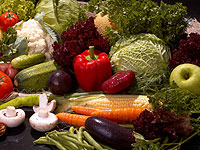
The Best Cancer-Fighting Veggies


From Health magazine

Not all vegetables are created equal. Some are much better than others at lowering your risk of diseases associated with aging—like cancer—according to a new study in Food Chemistry.

Researchers say antioxidant compounds in dark-green vegetables like spinach and “fragrant” vegetables like onions and garlic inhibit the growth of tumor cells. 

 Eat More… : Eat Less…
 Brussels sprouts : Potatoes
 Kale : Carrots
 Cabbage : Tomatoes
 Garlic : Lettuce
 Spinach : Cucumbers

The bad news: These veggies make up only 1% of fruit-and-vegetable consumption in the United States, while those that have almost no cancer-preventive power (like potatoes) make up 60%. All veggies can help control your weight, but to get more of an anticancer punch, try these swaps:

Last Updated: February 23, 2009
Filed Under: Nutrition and Eating Well

Is Calorie Counting Easy? America Wants Nutritional Information


From Health magazine

Nearly 8 in 10 Americans say they want fast-food and chain restaurants to list nutritional information more prominently—including calories. California became the first state to pass a menu-labeling law, and New York City has a similar law.

Do these laws help people say no to 500-calorie muffins, belly-busting burgers, and cake slices fit for four? The early research is mixed, but one study suggests that the new laws lead you to eat 50 fewer calories each time you dine out. That adds up to a weight loss of 3 pounds in a year. Here are the cities, counties, and states where the new laws are in force or pending.

  • Seattle
  • San Francisco
  • Santa Clara County
  • Chicago
  • Philadelphia
  • New York City
  • Montgomery County
  • Washington, D.C.

Last Updated: March 17, 2009
Filed Under: Nutrition and Eating Well

Low-Calorie Restaurant Meals Busted

From Health magazine

In a scary bit of diet detective work, a group of television stations across the country ordered “healthy” entrées from a number of chain restaurants, sent them to a lab for nutritional testing, and found out that the meals may actually contain more fat and calories than menus indicate—in some cases, two or three times more! Chili’s Guiltless Grill Salmon should have 480 calories and 14 grams of fat, for instance, but the salmon tested had 664 calories and 35 grams of fat. So how can you be sure you’re getting the diet-friendly lunch you ordered? Here, three tips from Phil Lempert, editor of SupermarketGuru.com and a food-industry expert.

Ask about oil. Chinese restaurants may use cooking oil plus sesame oil for flavor—and just one extra teaspoon will add 40 calories and 4.5 grams of fat. Ask the server to tell the chef to ditch the extra oil and substitute an extra sprinkle of herbs.

Go naked. If you order grilled fish, ask for it to be prepared without butter. Be just as specific with steamed veggies and other healthy picks.

Bring the dressing. Love salads? Bring your favorite low-cal dressing from home. Restaurant dressings on the side are OK, but use them sparingly unless you’re sure of their fat content.
(PHOTO: ISTOCKPHOTO)

Relate Links:(Please search)
America’s Healthiest Restaurants
How to Eat Out Without Gaining a Pound


Last Updated: February 12, 2009
Filed Under: Dining Out

Five Healthiest Foods for Your Buck


By Brett Hill
From Health magazine

Load these in your cart: They’re nutritional heavyweights for less than .

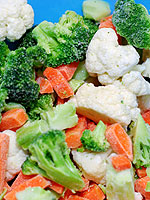
1. Frozen mixed vegetables
Add these low-calorie, fill-you-up, vitamin-rich gems to stews, soups, or pasta. Or serve them on the side, tossed with a little olive oil, salt, and pepper.

2. Canned wild salmon
Scramble it with eggs, use in place of tuna for a healthy sandwich, or top a salad with a few forkfuls for added protein and a boost of omega-3s.

3. Brown rice
Serve this filling, high-fiber grain as a side dish, add it to a salad, mix it with veggies, or even warm it up with a little cinnamon and milk for breakfast. Heads-up: It takes about 45 minutes to cook, so make a big batch.

4. Frozen edamame
Boil it for snacking, toss some into a stir-fry, or mix it with rice for added nutritional punch. Edamame is high in protein, fiber, B vitamins, folate, and vitamin K.

5. Sweet potatoes
Put them in casseroles, slice them for roasting, mash them, or use them in quick breads. These versatile veggies are loaded with fiber, beta-carotene, and vitamin A.

Last Updated: March 12, 2009
Filed Under: Shop Smarter

Get Your Family Involved in Changing Your Eating Behavior


In the spring of 2005, after four pregnancies, Julie Marsh weighed 240 pounds. “I wasn’t happy with myself,” she told Health magazine in April 2007. Inspired by her sister Cathy Andrew, who had resolved to lose weight in 2005, the sisters joined forces in dieting and exercising and had better success.

Research shows that dieters are more likely to change their ways if they feel they have the support of family, a close friend, or a coworker. It worked for this sister team: Along with eating more vegetables and smaller portions, they lifted weights three times a week and went on four to five mile walks at least four days a week. The workout buddies even tried activities they wouldn’t have done alone, like yoga and badminton. A year later, Julie had lost 85 pounds, and her sister had shed 105—a whopping 190 pounds of combined success.

Here are some tips for getting friends and family to support your desire to lose weight:

  • Be up-front. Let friends and family know you’re making changes in your eating habits. It may stop loved ones from offering you foods you’re trying to avoid and encourage healthy cooking at group events. Asking them for help also adds accountability.
  • Buddy up. The fact is, two-thirds of American adults are overweight and, chances are, you have friends or coworkers who may be interested in changing their eating behavior as well. Research shows that when one person slims down, those around him or her are more likely to lose, according to a 2007 study by researchers at Harvard Medical School and the University of California, San Diego.
  • Start small. If you’re worried about food pushers, make small, less noticeable changes instead of obvious ones. It will help you ease into weight loss and avoid unwanted attention. For example, at the next family dinner, use a salad plate when you go through the buffet. Chances are, no one will notice your little switch, and you’ll be consuming less food.

Last Updated: February 27, 2009
Filed Under: Healthier You

America’s Healthiest Fast Food Restaurants: Meet Our Experts

by Tracy Minkin and Brittani Renaud
From Health magazine

How we picked our winners
We started with a list of the 100 largest quick-serve chains in America, as defined by the number of locations. Using criteria that was created with the help of our expert panel (below), we scored the chains on such factors as the use of healthy fats and preparations, healthy sodium counts in entrees, availability of nutritional information, and the use of organic produce to arrive at our top 10.

Andrea N. Giancoli, MPH, RD, is a L.A.–based dietitian and a National Media Spokesperson for the American Dietetic Association.

Amy Jamieson-Petonic, RD, ADA spokesperson, is the author of How to Lose Weight and Feel Great Without Dieting and No Nonsense Nutrition: Real Nutrition for Real People.

Chef LaLa is a certified nutritionist, author of Chef LaLa Presents Best Loved Mexican Cooking, and owner of Savor! Catering in L.A.

Frances Largeman-Roth, RD, is the Senior Food and Nutrition Editor at Health and author of the forthcoming Feed the Belly: The Pregnant Mom’s Healthy Eating Guide (Sourcebooks, Inc., May 2009).

Marc Lawrence, MD, is a board-certified Physician Nutrition Specialist in California, and founder of BuddySlim.com, a social networking site for weight loss.

Marisa Moore, RD, LD, is a registered and licensed dietitian in Atlanta and a National Media Spokesperson for the ADA.

Last Updated: February 20, 2009
Filed Under: America's Healthiest

Eat for Gorgeous Skin

A delicious edamame appetizer followed by a grilled-tuna dinner might help cure crow’s-feet.

Researchers in Korea recently discovered a naturally occurring fat (phosphatidylserine) in foods like edamame (green soybeans), as well as tuna and mackerel, that can fight wrinkles caused by sun damage and natural aging.

This fat actually stimulated the production of new collagen; that’s good news because collagen, a protein, keeps skin strong and supple. The catch? The study involved applying a solution made with phosphatidylserine to skin—not eating it.

Plus, the solution isn’t yet available to consumers, and it’s not clear how much of these foods you would need to eat to fight wrinkles. Still, while researchers figure that out, there’s no reason to skimp: Fish can protect against heart disease, and edamame has a lot of fiber and vitamin C.

Last Updated: February 11, 2009
Filed Under: Nutrition and Eating Well